
Foundation Where You Need It:
Lisa Eldridge, makeup artist:
“Skin-like” — this is how Lisa Eldridge often describes the ideal finish of foundation: your skin should still look like skin, rather than like a layer of makeup. Her approach is to build coverage gradually, adding more only where it’s actually needed, instead of turning the entire face into a heavy mask.

And this is where many of us get it wrong.
We’re used to taking our foundation and spreading it evenly over the entire face: forehead, cheeks, nose, chin — right up to the hairline. It seems logical: if we want to even out the complexion, shouldn’t we cover everything?
But professional makeup often works in the opposite way: start by covering only the areas that actually need it, then blend whatever is left on the brush or sponge outward.

“You can dial it up or down.”
In other words, coverage can be adjusted depending on what each area of the skin needs.
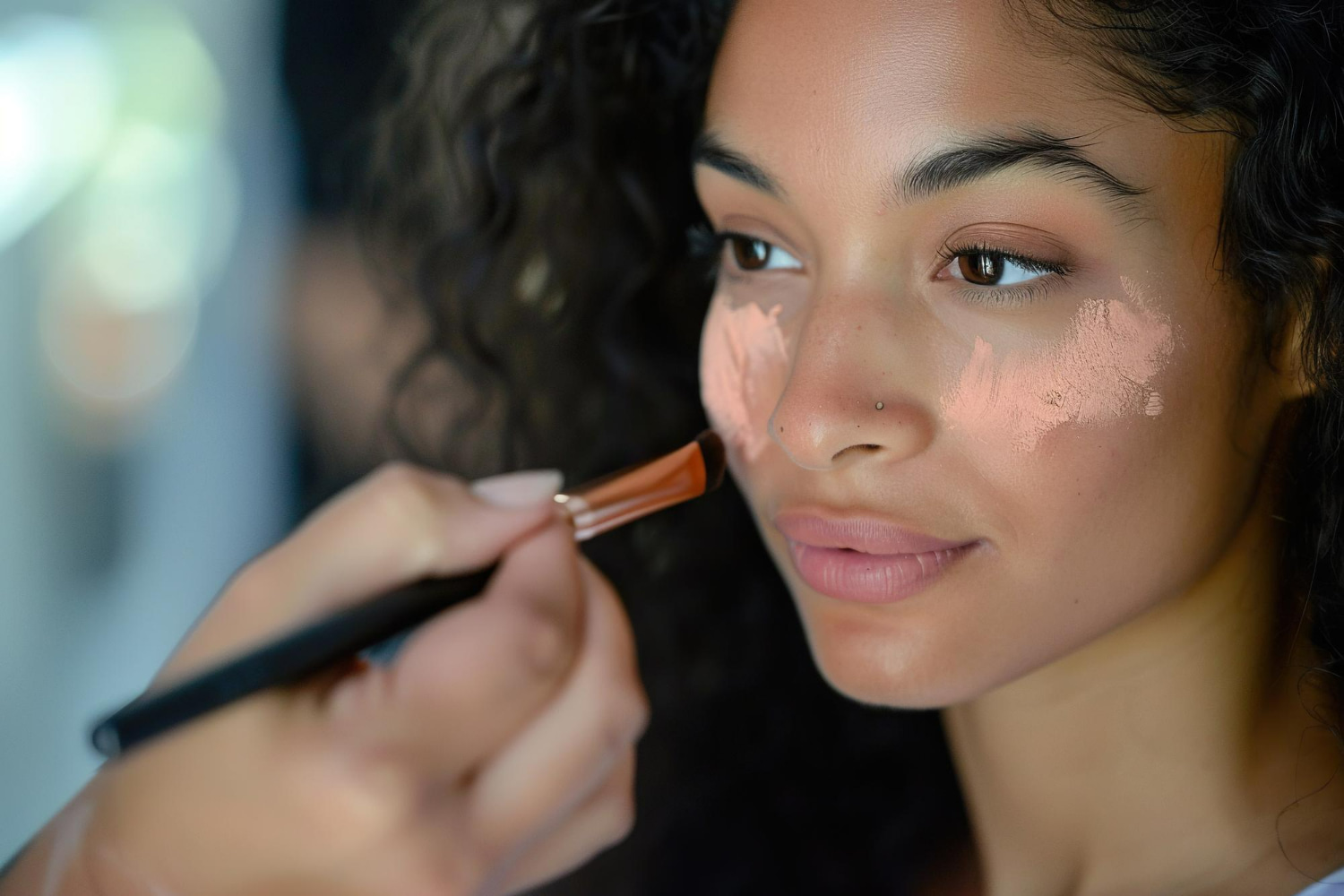
That’s why makeup artists often focus more on the center of the face. This is usually where you’ll find redness around the nose, blemishes, uneven skin tone, shadows, or other small imperfections.
The outer areas of the face — the temples, hairline, and outer cheeks — don’t necessarily need the same amount of product.
Instead, use whatever foundation is already left on your brush or sponge and gently blend it toward the edges.
Gucci Westman, makeup artist and founder of Westman Atelier:Her approach to makeup is all about making complexion products look and feel as much like real skin as possible: lightweight textures, a natural finish, and no heavy, overloaded feeling.
And there’s another important reason not to overdo your foundation.
When we apply too much product, it can actually emphasize the very things we’re trying to hide: pores, dryness, fine lines, and natural skin texture.
It’s ironic, but trying to make the skin look perfectly smooth can sometimes make its texture even more noticeable.
“Second-skin, seamless complexion.”
That’s the kind of result she aims for with her foundations — the feeling of a second skin, rather than a mask.
So professional makeup isn’t about how much foundation you can apply.
Sometimes the most beautiful skin is the skin with less foundation on it.
Cover the center. Correct what actually needs correcting. Blend the remaining product toward the edges. And leave some of your real skin visible.
Because foundation isn’t supposed to hide your face.
It’s supposed to make sure you can still see the face underneath.
Read the article: Expensive-Looking Lips Without a Perfect Lip Line