
Why Makeup Artists Layer Their Products
Violette Serrat, makeup artist:
“Apply your foundation in thin layers that are imperceivable, just where it’s needed.”

This quote perfectly captures what makes professional makeup different from the way many of us usually apply foundation.
We often want perfect skin immediately: we apply a generous amount of foundation, spread it evenly across the entire face, and expect a flawless finish.
But professional makeup artists work differently.
It’s not about one thick layer. It’s about several thin layers, placed exactly where they’re needed.
Violette Serrat calls her approach the Patchwork Skin Technique: rather than automatically covering the entire face, you apply coverage intuitively and selectively, allowing some of your natural skin to remain visible.
And this becomes especially important when we’re talking about skin texture.
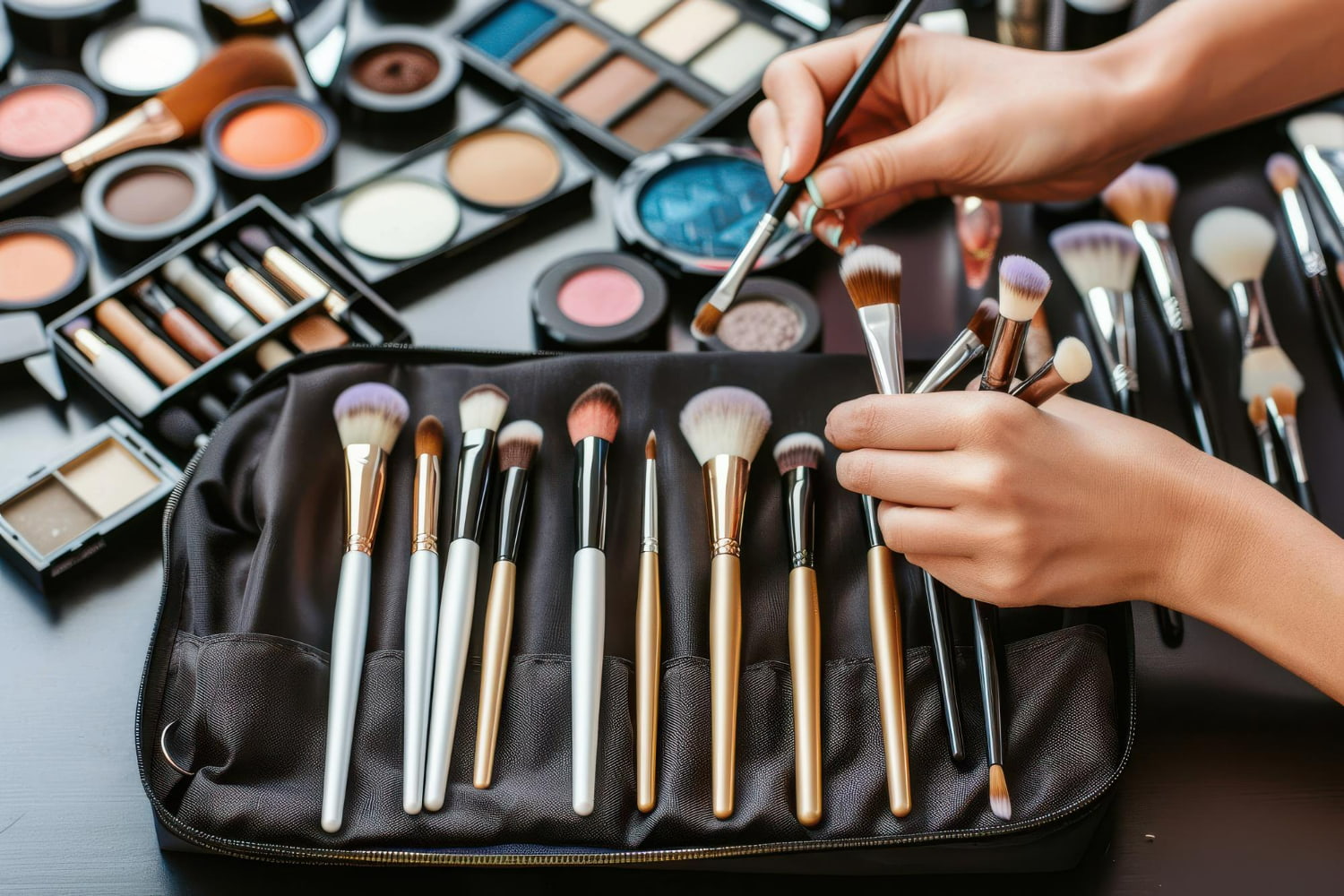
The first layer of foundation should be extremely thin. Its job is to gently even out the complexion — not to completely erase the natural texture of your skin.
Then, pause.
Give the product a moment to settle and blend into the skin. Once it has, you can see where you actually need more coverage.
Violette Serrat:
“You can dial it up to a fuller finish in the areas you feel you need it, without it ever appearing heavy or mask-like.”
Instead of immediately applying more product everywhere, build the coverage locally.
For example, one thin layer may be enough on the cheeks. Around the nose, over redness, or on specific imperfections, you can add a second layer.
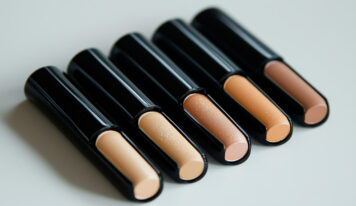
The same principle applies to concealer.
You don’t need to apply a thick layer across the entire under-eye area or over every imperfection. Start with a small amount, blend it out, and only add more where additional coverage is actually needed.
Cream blush works the same way.
Start with a small amount, blend it, look at the result, and then build the colour if necessary. This allows the intensity to develop gradually without creating a heavy patch of pigment.
And when it comes to powder products — bronzer, blush, or setting powder — the principle is even simpler:
It’s always easier to add than to take away.
Keep the first layer light. Then build intensity only where you want more definition or colour.
Even powder doesn’t need to be applied in one heavy, uniform layer across the entire face. The amount and placement should be adapted to different areas of the skin.
And this creates an interesting paradox:
Three thin layers in different areas can look far more natural than one thick layer across the entire face.
Because professional makeup isn’t really about how much product you use.
It’s about control, layering, and precision.
First — a thin layer.
Then — take a moment to look at the skin.
Next — targeted correction.
And finally — blend again.
That’s why professional makeup can look as though there’s almost nothing on the face.
Not because there’s very little product — but because every bit of it has been placed exactly where it’s needed.
Read the article: The Perfect Winged Liner Doesn’t Start at the Lashes