
Lisa Eldridge, makeup artist:
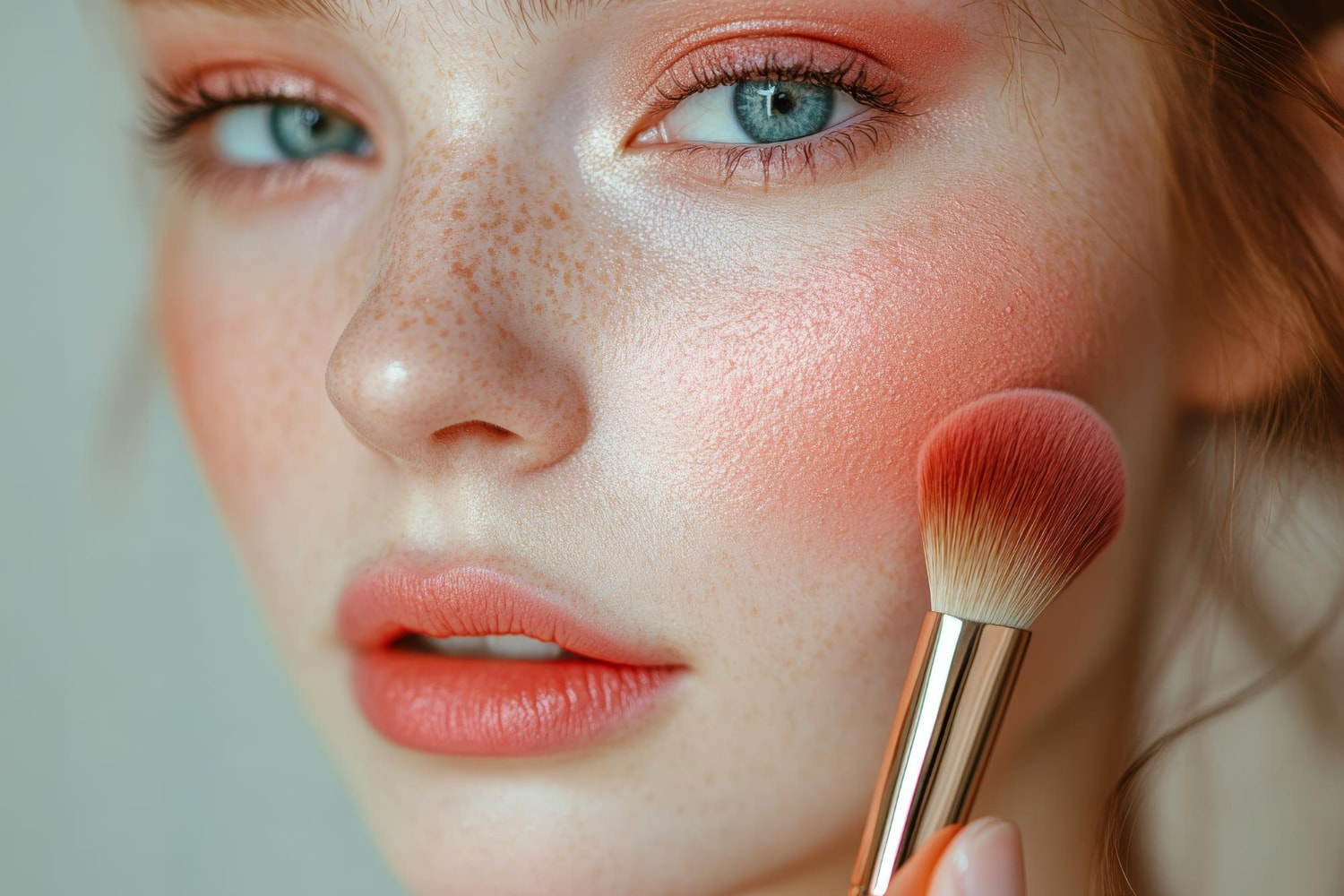
“Blusher is about adding colour and dimension, not contouring or sculpting.”
But there’s an important detail: while blush isn’t contouring, where you place it can absolutely change the way your face is perceived.

That’s why the universal rule of “smile and apply blush to the apples of your cheeks” doesn’t necessarily work for everyone.
Lisa Eldridge:
“Where you apply it is dependent on your face shape.”
In other words, you should look at the shape of your face first, and then decide where the colour belongs.
For example, applying blush closer to the centre of the cheeks — especially directly onto the fullest part of the “apples” — brings more colour and visual volume to the centre of the face. This can create a softer, rounder, more youthful effect.
But if your goal is to visually lift and elongate the face, the technique changes completely.
Lisa Eldridge recommends that for a round face, you gently sweep blush in the shape of a large C: starting around the cheekbones and moving upward toward the temples. This placement draws the eye upward and helps create a more lifted appearance.
Lisa Eldridge:
“If you have a round face, blusher works best if you brush it on in a big, soft ‘C’, starting on your cheekbones and sweeping up to your temples.”
For a longer face, she suggests the opposite approach: keeping more colour toward the centre of the cheeks. This can visually break up the length of the face and create softer-looking proportions.
And this is where it gets really interesting:
The same blush shade can create a completely different effect depending on where you place it.
Makeup artist Sarah Biggers, for example, recommends placing blush slightly below the apples of the cheeks and blending it back toward the hairline for a more lifted effect on rounder faces.
So what happens if you place blush too low?
The colour can begin to pull the visual focus toward the middle and lower part of the face. Instead of creating that fresh, lifted effect, it can make the face appear heavier.
That’s why modern professional makeup is less about following strict rules and more about understanding direction.
Want a softer, rounder, fresher look? Keep the colour closer to the centre.
Want a lifted effect? Move the blush higher, toward the cheekbones and temples.
Want to soften the appearance of a longer face? Don’t be afraid to keep more colour toward the centre of the cheeks.
Lisa Eldridge:
“Think colour — not contour.”
And that might be the most important principle of all.
Blush doesn’t have to go exactly where we were taught to put it years ago.
Look at your face. Decide what effect you want to create.
Because sometimes the question isn’t which blush you’re using.
It’s where you’re putting it.
Read the article: All the Subtleties of Everyday Makeup